

A laboratory crucible is a small, cup-shaped container designed to withstand extremely high temperatures. They are primarily used for chemical analysis, melting materials, or heating samples to ash (gravimetric analysis) inside a muffle furnace or over a Bunsen burner.
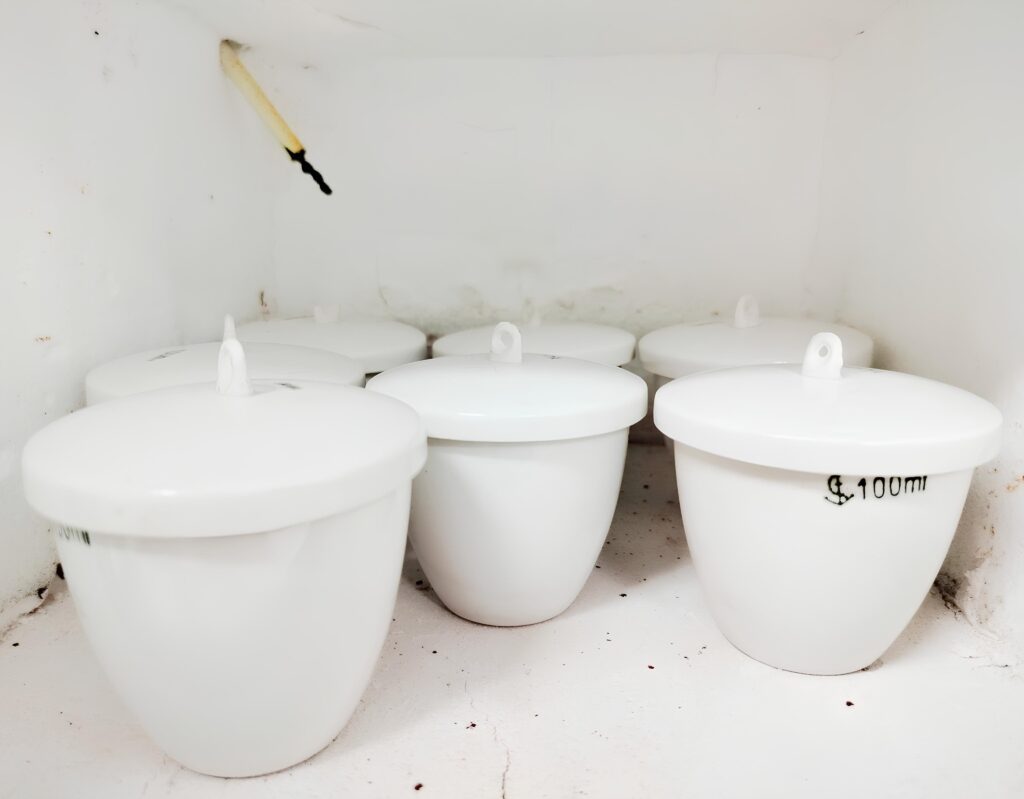
There are various types of crucibles, mainly classified by the material they are made of.
Porcelain crucible:
– Advantages: Affordable, easy to handle, good resistance to reagents.
– Disadvantages: Limited to temperatures up to 1000 °C.
– Uses: Simple calcination, gravimetric analysis.
Quartz crucible:
– Advantages: Withstands up to 1300 °C, high chemical resistance, transparency.
– Disadvantages: Fragile, expensive.
– Uses: Processes requiring visual monitoring.
Platinum crucible:
– Advantages: Highly resistant, inert, ideal for precise analysis.
– Disadvantages: Very expensive, sensitive to some elements.
– Uses: Thermogravimetry, fusion of pure materials.
The right crucible depends on the sample, required temperature, and chemical compatibility. For most routine chemistry labs, porcelain or alumina is a practical choice; for extreme heat or special chemistry, zirconia, platinum, or graphite may be better.